
Advancing Youth Well-Being Through Partnership: A Collaborative Approach to Mental Health
Speakers:




6.5 CME Credits Available!
About This Conference
Today's children and adolescents are growing up in an era of unprecedented pressure — navigating social media, climate anxiety, identity-based violence, substance use, and mental health crises, often without the support systems they need. Meanwhile, pediatricians, family physicians, and child and adolescent psychiatrists are being asked to recognize and respond to increasingly complex presentations across both physical and mental health.
This conference brings together leading national experts and Maine clinicians for a full day of education, dialogue, and practical tools — designed specifically for the collaboration between primary care and psychiatric providers that today's youth urgently need.
This conference is presented by the Healthy Mental Development Committee – a partnership between the Maine Chapter, AAP Maine Council of Child and Adolescent Psychiatry, and the Maine Academy of Family Physicians.
Topics include:
- Strategies for working with Trauma Affected Youth
- Pediatric Malnutrition and the Psychological Effects of Food Insecurity
- Treatment Strategies for Suicide Risk with Identity Challenges
- New Strategies for Cannabis Treatment
- Climate Change Anxiety in Youth
- Youth Violence, Bullying and LGBTQ+ Youth Mental Health
Who Should Attend
- Pediatricians and family physicians
- Child and adolescent psychiatrists
- Community and school based behavioral health clinicians and therapists
- Nurses, nurse practitioners, and physician assistants
- Residents and fellows in pediatrics, family medicine, and psychiatry
Agenda
8:30 - 9:30AM
Collaborative & Proactive Solutions: Different Lenses and Practices for Concerning Behavior
-

Ross W. Greene, Ph.D., is a clinical psychologist and the originator of the innovative, evidence-based approach called Collaborative & Proactive Solutions (CPS), as described in his influential books The Explosive Child, Lost at School, Lost & Found, Raising Human Beings, and The Kids Who Aren’t Okay: The Urgent Case for Reimagining Support, Belonging, and Hope in Schools. He also developed and executive-produced the award-winning documentary film The Kids We Lose, released in 2018. Dr. Greene was on the faculty at Harvard Medical School for over 20 years, and now oversees the non-profit he founded in 2009, Lives in the Balance, which advocates legislatively on behalf of kids with concerning behaviors and their caregivers and provides vast free resources on the CPS model. He is also currently adjunct Professor in the Department of Psychology at Virginia Tech and in the Faculty of Science at the University of Technology Sydney in Australia. Dr. Greene has worked with several thousand kids with concerning behaviors and their caregivers, and he and his colleagues have overseen implementation and evaluation of the CPS model in countless schools, inpatient psychiatry units, and residential and juvenile detention facilities, with dramatic effect: significant reductions in recidivism, discipline referrals, detentions, suspensions, and use of restraint and seclusion. He has been featured in a wide range of media, including The Oprah Show, Good Morning America, The Morning Show, National Public Radio, Dateline, The Atlantic, Mother Jones, New York Magazine, The Washington Post, and CNBC. Dr. Greene lectures throughout the world and lives in Freeport, Maine.
Learning Objectives:
- Describe the key tenets of the Collaborative & Proactive Solutions (CPS) model.
- Describe the key factors contributing to concerning behavior in kids.
- Describe how the practices of the CPS model differ dramatically from traditional models of intervention.
9:30 - 10:30AM
The Legacy of Childhood Malnutrition: Lifespan and Intergenerational Effects
-

Janina R. Galler, MD, is Professor of Pediatrics at Harvard Medical School and a Senior Researcher, Division of Pediatric Gastroenterology and Nutrition, MassGeneral Hospital for Children, Boston, MA.
A summa cum laude graduate of the Sophie Newcomb College of Tulane University, New Orleans, she received her MD from the Albert Einstein College of Medicine. Dr. Galler was a resident in Psychiatry and Child Psychiatry at the Massachusetts General Hospital and Boston University School of Medicine.
Dr. Galler is recognized as a leader in the field of childhood nutrition and mental health. Her work has shown that the effects of early malnutrition can last over the lifespan and for generations, even when the offspring have not been malnourished themselves. She is the founding Director of the Barbados Nutrition Study, a 53-year longitudinal study that has followed underserved children with histories of early malnutrition and matched controls, their offspring and grandchildren over their lifespans and subsequent generations. She also conducts multidisciplinary research in animal models of prenatal and intergenerational malnutrition. Exciting new facets of her research involves the study of epigenetics. Epigenetic mechanisms offer an intriguing explanation of our earlier findings and provide a powerful new tool to identify potential intergenerational mechanisms of early life malnutrition and associated behavioral and mental outcomes conditions. Dr. Galler’s collaboration with researchers in Canada, China, Malaysia and Cuba has focused on identifying early brain biomarkers of child malnutrition that predict adverse cognitive and behavioral outcomes in middle and late adulthood.
Among her many honors, Dr. Galler was the inaugural Joseph P. Kennedy Foundation Public Policy Fellow in Mental Retardation, and she served as a US Senate Fellow on the Committee on Labor and Human Resources. She was the chairperson of the Eunice K. Shriver National Institutes of Child Health and Development (NICHD) Advisory Council, which oversees US research funding for child health, the NIH Directors Advisory Committee and the NICHHD Mental Retardation Research Committee. She was also a scientific advisor to the Joseph P Kennedy Foundation and the Thrasher Research Fund for many years. Dr. Galler was awarded the Blanche F. Ittleson Award for Research in Child Psychiatry from the American Psychiatric Association, the Irving B. Harris Award from the Society of Behavioral Pediatrics, the Sophie Newcomb Centennial Award from Tulane University and is the only woman to have been awarded the Leon Eisenberg Award for leadership in global mental health, neurodevelopmental disabilities and research ethics by Harvard Medical School and Boston Children’s Hospital. Dr. Galler’s research has been supported by 32 years of NIH funding. She is the author of over two hundred peer-reviewed publications and two books on Nutrition and Behavior.
Dr. Galler is a practicing child and adolescent psychiatrist.
Learning Objectives:
- Explain how childhood malnutrition during critical periods of brain development (from birth to 2 years) leads to permanent impairments in cognitive function and mental health.
- Identify major adverse outcomes in childhood and adolescence include: (1) IQ deficits and poor school performance; (2) ADHD-inattention and poor executive function; (3) conduct disorder and depressive symptoms; (4) abnormal EEGS and soft neurologic signs.
- Describe the potential adverse outcomes in middle and later adulthood that include: (1) attention and executive function deficits; (2) maladaptive personality traits; (3) accelerated cognitive decline; (4) 4-fold increase in diabetes among women.
- Discuss how changes in DNA methylation are associated with attentional deficits in both parent and offspring generations in both humans and animal models.
10:30 - 10:45AM
BREAK
10:45 - 11:45AM
In Betweenness: Suicide Risk at the Margins of Identity
-

Melissa Johnnidis, DO, is a child, adolescent, adult, and family psychiatrist. She is originally from Texas, where she grew up and completed both medical school and psychiatry residency. She later moved to Portland, Maine to complete her fellowship in child and adolescent psychiatry and continues to practice there. Dr. Johnnidis’s clinical interests include early intervention in youth mental health, family-centered care, and teaching and mentoring trainees.
-

Alyssa Goodwin, MD is a pediatrician, expert in school health, and pediatric mental health advocate. She earned her BA in Neuroscience from Amherst College and her MD from George Washington University. Before founding Stellar Pediatrics, Dr. Goodwin trained at Children’s National Medical Center and spent two decades practicing primary care pediatrics in Maine, where she developed a deep commitment to child and adolescent mental health.
Dr. Goodwin serves on the Board of Directors for the Maine Chapter of the American Academy of Pediatrics (AAP), where she co-created and chairs the School Health Committee. In this role, she advances initiatives at the intersection of school health and preventive wellness to better support students statewide. She served as the Maine Learning Ambassador for the AAP’s “Blueprint for Youth Suicide Prevention” and as faculty for the AAP and American Foundation for Suicide Prevention Clinical ECHO. Dr. Goodwin now serves as the American Academy of Pediatrics (AAP) Healthy Mental Development Champion for Maine.
In addition, Dr. Goodwin serves on the Board of Directors for the Kita Center, where she is also the medical advisor and a volunteer at their flagship program, Camp Kita.
Learning Objectives:
- Describe the epidemiology of suicide risk among individuals occupying "in between" identities.
- Explain minority stress and identity invalidation frameworks as factors contributing to suicidal ideation and behavior.
- Apply identity affirming and resilience-oriented interventions to mitigate suicide risk, including strengthening connectedness.
11:45AM - 12:30PM
LUNCH
12:30 - 1:15PM
How to talk to Kids and Families about Cannabis
-
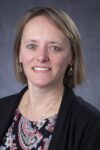
Dr. Mayhew completed her Master’s Degree in Public Health from Tulane University in New Orleans, LA. She was a Peace Corps volunteer in Nepal. She earned her medical degree from the University of Rochester School of Medicine and Dentistry in Rochester NY. She completed a residency in Psychiatry at Baylor College of Medicine in Houston TX, then a fellowship in Child & Adolescent Psychiatry from Cambridge Health Alliance in Cambridge, MA. She is Board certified in both Psychiatry and Child & Adolescent Psychiatry.
Dr. Mayhew moved to Maine Medical Center from Massachusetts where she was Medical Director of the Psychiatry Access Program. She has participated in funded research, currently on a SAMHSA-supported project for integrated models of pediatric psychiatry. She is also a dedicated educator, teaching and supervising students and pediatric residents. She is also the clinical director for PIER, an early psychosis coordinated specialty care program. At MMC, Dr. Mayhew teaches and supervises TUSM medical students as well as residents and fellows in Psychiatry and Child Psychiatry.
Learning Objectives:
- Participants will learn new information about the state of affairs with health, mental health, and cannabis.
- Participants will learn some motivational techniques to help parents and families reduce cannabis use.
- Participants will learn how to screen for issues with cannabis and provide guidance for harm reduction.
1:15 - 2:00PM
The Gut-Brain Axis and Contemporary Environmental Exposure: Ultra-Processed Foods, Plastics, and Mental Health
-

Grace Mueller is a child and adolescent psychiatrist at MaineGeneral in Augusta. She is a graduate of Tufts University School of Medicine and completed psychiatry residency and child and adolescent psychiatry fellowship at Maine Medical Center. Originally from southern Illinois, she loves exploring Maine with her daughter.
Learning Objectives:
- Describe the core pathways of the gut-brain axis and their relevance to common psychiatric disorders.
- Critically evaluate current evidence linking ultra-processed foods and plastic exposures to mental health outcomes.
- Discuss proposed biological mechanisms connecting environmental exposures to psychiatric symptoms.
2:00 - 3:00PM
Supporting Youth in a Changing Climate: A Climate-Aware Perspective on Mental Health
-

Dr. Jon Gorman is a licensed clinical psychologist in Maryland. He is the owner of Towson Therapy Group, a group psychotherapy practice in Towson, MD, and an Assistant Clinical Professor of Psychology at Loyola University Maryland.
Dr. Gorman’s professional focus is the psychological impacts of climate change and what to do about it. He is an active member of Climate Psychology Alliance of North America and Healthy Climate Maryland, and he is listed on the Climate Aware Therapist Directory.
Dr. Gorman has testified in front of the Maryland General Assembly in support of climate legislation and has presented on the topic to legislators around the United States. He has also given many presentations on mental health and climate change to students, therapists, and the general public, and his climate therapy work was featured in Maryland Matters. In addition, he taught Loyola University’s first course on the Psychology of the Climate Crisis. Dr. Gorman is the author of the book Facing Climate Anxiety (2025).
Learning Objectives:
- Recognize common ways that climate change and climate-related distress may affect the mental health and well-being of children and adolescents.
- Distinguish between adaptive climate distress and anxiety that warrants additional clinical assessment or intervention.
- Apply climate-aware principles to conversations with youth and families in ways that validate emotions, foster resilience, and supporting meaningful action.
3:00 - 4:00PM
Youth Violence, Bullying, and LGBTQ+ Youth Mental Health
-

Dr. Alex Keuroghlian is the Chief of MaineHealth Behavioral Health (MHBH) and Chair of Psychiatry at MaineHealth Maine Medical Center (MHMMC). As Chief, Dr. Keurghlian is responsible for the overall clinical operation of behavioral health services across the MaineHealth system; as the Department Chair he leads the clinical, teaching, and research programs at MHMMC Department of Psychiatry, including residency and fellowship training in general and child psychiatry and the academic affiliation with Tufts University School of Medicine.
Dr. Keuroghlian previously served as the Michele & Howard J. Kessler Chair and Director of the Division of Public and Community Psychiatry at Massachusetts General Hospital (MGH), Associate Chief for Public and Community Psychiatry in the MGH Department of Psychiatry, and Director of the Division of Education and Training at The Fenway Institute. He is an Associate Professor of Psychiatry at Harvard Medical School.
Dr. Keuroghlian graduated with a degree in medicine and a master's degree in neurosciences from Stanford University School of Medicine and holds a Master of Public Health (MPH) degree from Harvard T.H. Chan School of Public Health. He completed his residency in psychiatry at MGH/McLean Hospital and a fellowship in community health leadership at MGH.
Learning Objectives:
- Describe how sexual and gender minority stress adversely impact LGBTQ+ youth.
- Explain how bullying and violence against LGBTQ+ youth contribute to worse mental health outcomes.
- Apply best clinical practices within safe and welcome care settings to improve mental health among LGBTQ+ youth.